
Le 23 avril : journée mondiale de la langue anglaise !
Le 23 Avril est la journée mondiale de la langue anglaise. Elle a été créée pour des raisons culturelles et historiques. Elle a été instaurée par l’Organisation des Nations Unies (ONU) afin de promouvoir le multilinguisme et valoriser les langues officielles utilisées dans les institutions internationales. L’anglais est l’une des 6 langues officielles de l’ONU (avec le français, l’espagnol, l’arabe, le russe et le chinois). La journée est célébrée le 23 avril, ce choix correspond à la date de naissance (supposée) et de mort de William Shakespeare. Il est considéré comme l’un des plus grands auteurs de langue anglaise, donc un symbole fort de cette langue.
Cette journée sert à encourager l’apprentissage de l’anglais, à valoriser la diversité linguistique, à rappeler l’importance de la communication internationale et à promouvoir la culture et la littérature anglophones. Parce qu’aujourd’hui : l’anglais est une langue très utilisée dans le monde, elle est dominante dans les échanges internationaux, la science, internet, les affaires, …
L’ONU ne cherche pas à favoriser uniquement l’anglais, mais à équilibrer l’usage des langues et éviter qu’une seule domine trop. La journée mondiale de la langue anglaise existe pour célébrer cette langue, tout en rappelant l’importance du multilinguisme, avec un clin d’œil à Shakespeare.
Quelle relation entre William Shakespeare et les abeilles ?
La relation entre William Shakespeare et les abeilles est surtout symbolique et littéraire. Il utilisait souvent les abeilles comme métaphore de la société humaine, une métaphore de l’ordre et de la société. Dans ses œuvres, Shakespeare décrit la ruche comme une société parfaitement organisée : une hiérarchie, un travail réparti, une coopération efficace. Pour lui, les abeilles représentent une image idéale du fonctionnement d’un royaume.
L’exemple le plus célèbre est dans la pièce Henry V
Dans la pièce, Henry V, Shakespeare compare directement un État à une ruche : Les abeilles ont un roi, des ouvrières, des rôles précis… comme dans une nation bien organisée. Bien sûr, à l’époque, on pensait que la ruche avait un roi, on ne savais pas encore bien que c’était la reine, une femelle.
Voici une citation de l’extrait : Henry V — Acte I, scène 2 (version originale)
“Therefore doth heaven divide
The state of man in divers functions,
Setting endeavour in continual motion;
To which is fixed, as an aim or butt,
Obedience: for so work the honey-bees,
Creatures that by a rule in nature teach
The act of order to a peopled kingdom.”
C’est une comparaison entre la société humaine et une ruche. Shakespeare utilise les abeilles pour parler de : l’ordre social, de l’obéissance au pouvoir, la coopération, l’harmonie collective. C’est une façon indirecte de réfléchir à la politique et au pouvoir.
Toujours dans la même pièce et le même acte on a ce passage sur les abeilles.
“They have a king and officers of sorts:
Where some, like magistrates, correct at home;
Others, like merchants, venture trade abroad;
Others, like soldiers, armed in their stings,
Make boot upon the summer’s velvet buds…”
Ici Shakespeare décrit une image positive de la nature. Les abeilles symbolisent aussi : le travail, la discipline la prospérité (le miel ?). Shakespeare n’était pas apiculteur, mais il voyait dans les abeilles un modèle naturel de société humaine, qu’il utilisait pour illustrer ses idées sur le pouvoir et l’organisation. Il explique un « roi », des ouvrières, des soldats, des « marchands ».
Shakespeare évoque l’ordre naturel et la hiérarchie, avec des comparaisons indirectes incluant les abeilles (moins détaillées), dans la pièce Troilus and Cressida. Dans King Henry IV — Part 2, il fait référence plus brièvement aux abeilles pour illustrer l’activité, le travail collectif. Dans The Tempest, on trouve une mention poétique du miel et des abeilles dans un contexte plus naturel et symbolique.
On retiendra que le passage de Henry V est le texte clé sur les abeilles chez Shakespeare, il les utilise comme modèle d’organisation politique. À son époque, la vision de la ruche était imparfaite mais déjà fascinante.
À l’occasion de cette journée mondiale de la langue anglaise BeePlanète vous propose ses animations en anglais !
Original Corporate Activities
When it comes to energizing the workplace, strengthening team cohesion, and motivating employees, nothing works better than creative and engaging activities. In this article, we will explore the many benefits that these fun events bring to companies.
Team cohesion: Activities help create a friendly environment and strengthen relationships between employees. They foster team spirit and collaboration by encouraging employees to interact and get to know each other outside the workplace.
Employee motivation: Original activities provide an opportunity for employees to relax and have fun, which can improve their well-being and job satisfaction. This can also boost their motivation and sense of belonging within the company.
Rewards and recognition: Corporate activities can be used as a form of reward or recognition for employees who have contributed to the company. This encourages them to continue giving their best and reinforces their sense of being valued.
Internal communication: Corporate activities can serve as a tool for internal communication, helping to share important information with employees in a fun and interactive way. This promotes engagement and helps employees better understand the company’s goals and values.
Corporate activities are an effective way to strengthen team cohesion, motivate employees, reward them, and communicate in an engaging way. They help create a positive and stimulating work environment, which can potentially increase productivity and employee satisfaction.
Corporate Activities Offered by BeePlanète
Awareness or celebration days: Activities focused on environmental themes, such as World Environment Day, European Sustainable Development Week, World Bee Day, etc.
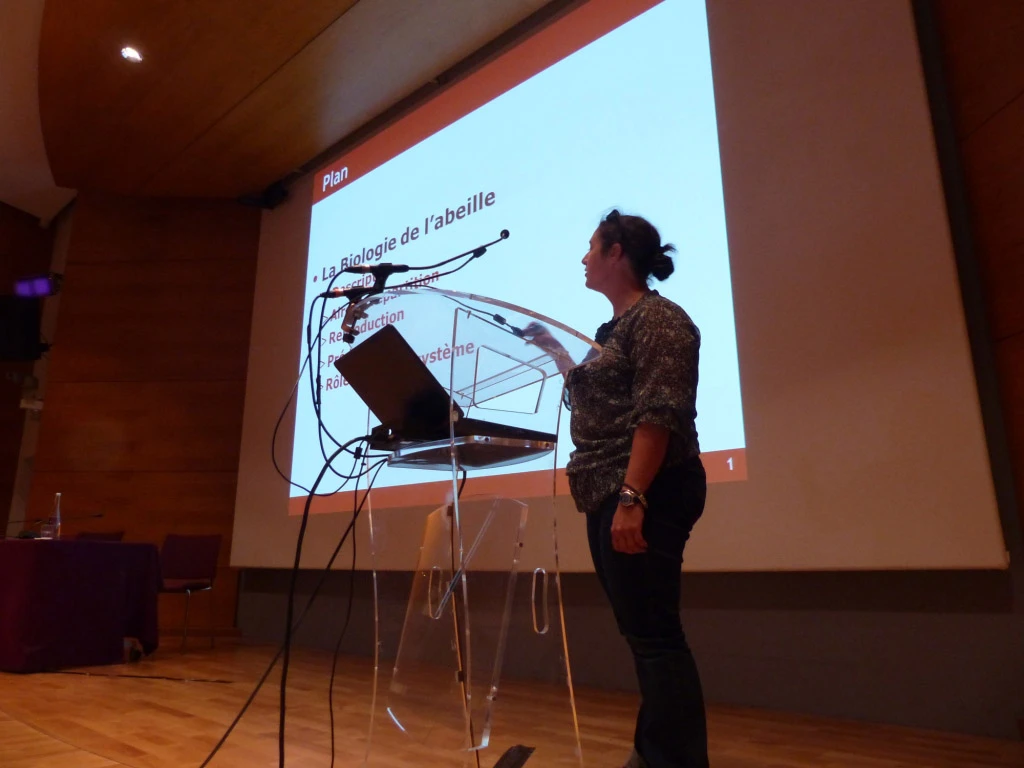
These events are an opportunity to raise awareness about the importance of biodiversity and the challenges it faces. On these occasions, we organize events such as conferences, exhibitions, workshops, and educational activities.
Celebrating a company anniversary: This is an opportunity to thank employees for their contribution and dedication to the company. It also allows recognition of their work and strengthens their commitment to the organization.
Organizing original activities around bees, honey, and biodiversity: A great opportunity to bring all employees together around a shared event and a topic that is increasingly important to many people. This fosters a sense of belonging and strengthens company culture. It is also an opportunity to reinforce the company’s values and objectives.
During seminars, training sessions, and team building: Original activities can be organized to improve participant engagement and make learning more interactive. These may include creative workshops (lip balms and beeswax wraps), participatory workshops (discovering and taking part in honey extraction and jarring), escape games, observation outings, etc.
During end-of-year celebrations or corporate events: Original activities can be offered to entertain employees during a Christmas party or any special company event.
These activities are designed for an adult audience and can also be adapted for partner middle schools, high schools, and primary schools. Employees’ children are also welcome to participate in specially adapted activities.
How does a beekeeping discovery workshop work?
Your beekeeper arrives with beekeeping equipment such as a hive, a smoker, posters about honey, propolis, wax, etc., and sets up a space to استقبال employees or the selected group of participants. The format is flexible and informal: participants can come at any time and stay as long as they wish.
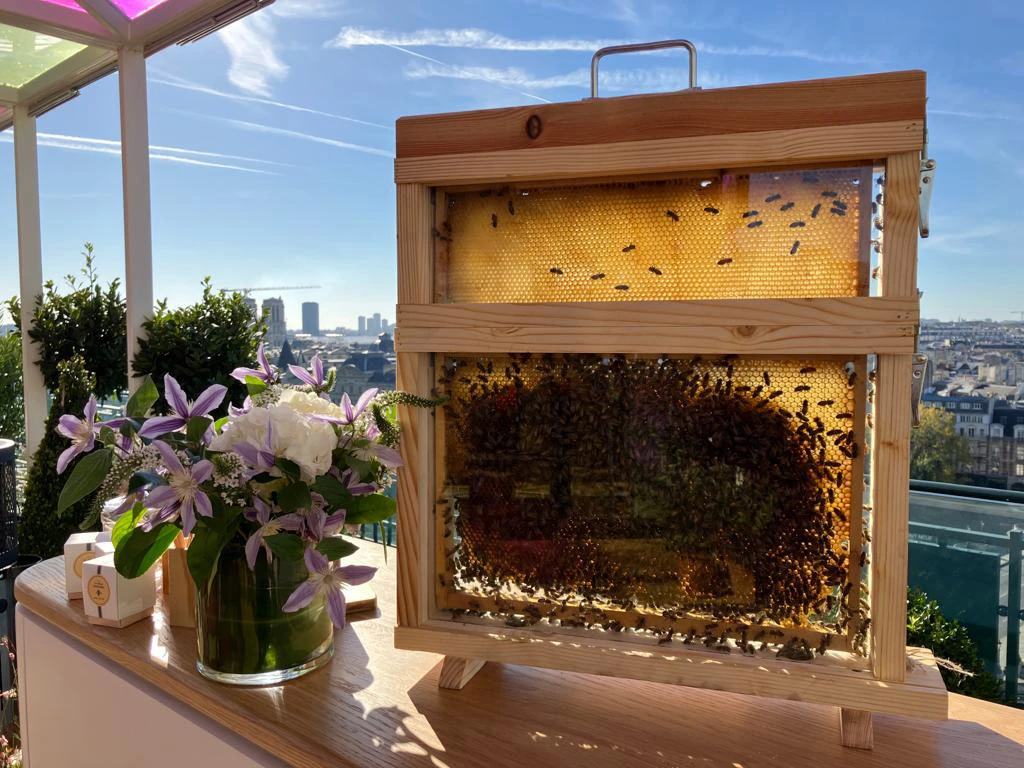
Depending on the season, your beekeeper may also bring live bees in an observation hive. They can also set up a honey tasting bar open to all. This workshop can take place in a common area during lunch breaks.
Your beekeeper will answer all the questions people may have about the hive hosting a colony of bees within their company. These questions are often varied, such as: How long does the queen live? Why is honey sometimes solid and sometimes liquid? Do bees sting? Where do our bees forage? etc.
How does a bee discovery workshop work?
Employees gather in a part of the company they rarely visit: the apiary. For most participants, it’s a chance to step out of the office.
Of course, good weather is essential for the workshop to be successful. Your beekeeper arrives with equipment such as suits, gloves, and veils. Participants get dressed and approach the bee colony. Often, initial fears or phobias disappear thanks to the calmness of the bees and the emotion created by observing the colony.
Watching thousands of worker bees cooperate around a queen to sustain the colony—collecting nectar, pollinating flowers, and surviving the winter—is an intense and memorable experience.
What topics can be covered in a conference?
We offer several topics for these interactive conferences. Of course, we can start with everything you’ve always wanted to know about bees: What do they do inside the hive? How do they communicate? How do they reproduce?
We can broaden the topic to include their interactions with their environment: flowers, trees, as well as their predators and parasites. There are around 1,000 species of bees in mainland France, and they are not the only pollinators—so who are these other pollinators?
Pollinators are only a small part of biodiversity, which raises a broader question: what is biodiversity?
What is a bee wrap workshop?
The beekeeper arrives with all the materials needed to make bee wraps. But first, what is a bee wrap? It is a reusable piece of wax-coated fabric used to wrap food or cover dishes, protecting them from air and moisture—just like plastic lids or cling film.
Participants create their own wraps during a creative session held directly within the company. They leave with their creations and can easily make more at home.
It’s an enjoyable moment that highlights the importance of beeswax and its long-standing use by humans. Indeed, bees are not only essential for honey but also for wax. In your company’s hive, worker bees are likely producing wax right now. Rediscovering beeswax can be a great alternative to certain plastics.
What happens during a bird-watching tour?
A small group of employees meets in a public garden, often near a pond—more or less close to the company depending on the time available.
Everyone wears suitable shoes for walking on paths or trails. You already know that bees pollinate the plants around your company’s hive—but they are not the only ones interacting with vegetation.
During the walk, with eyes and ears alert, we observe the birds around us: where they are (on the ground, in trees, in flight), what they are doing (watching, feeding, bathing, singing), and who they are.
Participants quickly realize they are keen observers of the environment surrounding their workplace.
